
Chapter 4 · All chapters
- 1Decide what problem you are solving
- 2Choose a distribution model
- 3Set up the organization
- 4Plan the space and equipment
- 5Find reliable food sources
- 6Food safety and inventory
- 7Design the guest experience
- 8Recruit and manage volunteers
- 9Board governance and leadership
- 10Money, policies, and accountability
- 11Get the word out
- 12Run a distribution day
- 13Measure results and grow
- 14A 90-day launch plan
- AReady-to-adapt templates
Chapter 4 of 14
Plan the space and equipment
A small room can support a useful pantry if food and people move predictably and safely.
Draw three zones
- Receiving and storage. Inspect incoming donations, then place accepted food on shelves.
- Picking and packing. Assemble orders or restock the choice area.
- Guest service. Check guests in and distribute food without bringing visitors into storage areas.
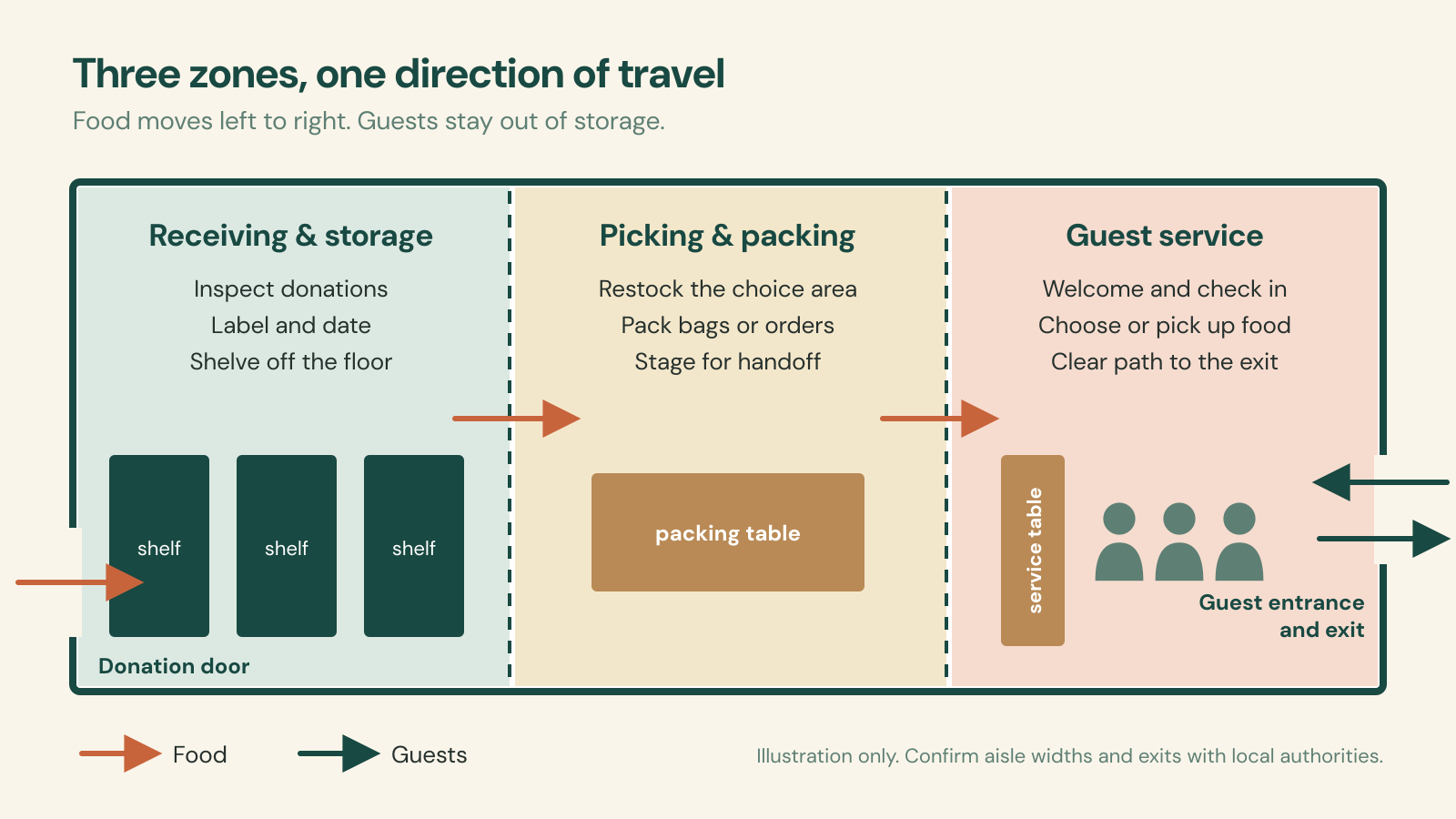
Start with the minimum
- Shelving, washable tables, bins, and labels
- Cleaning supplies, carts or dollies, and access to handwashing
- A basic receiving log, and a scale if you will report by weight
- A thermometer for any cold storage; add refrigeration only if someone can monitor it consistently
- Bags or boxes for guests who arrive without them
Think through the bottlenecks
- Measure door widths, turning space, and accessible pathways.
- Identify emergency exits and check restroom access.
- Plan for lines and waiting areas, with shade or shelter if guests wait outside.
- Avoid stacking heavy food overhead.
- Verify accessibility and fire-safety requirements with local authorities.
Check power before you accept a freezer
Donated refrigerators and freezers are easy to come by and easy to overload a circuit with. Before you say yes, find out what the room's wiring can carry, where the breaker is, and who gets the call if a unit fails overnight. A fridge nobody is watching is worse than no fridge.
Space example: a 10 × 10 ft room
Use the room mainly for storage and packing, with guest handoff outside the room. Keep a clear central aisle, reserve a receiving surface, and separate cleaning products from food. A full grocery-style walkthrough is unlikely to be comfortable in this footprint; a menu or table-service version of choice works better.
Discuss with your team
- Can two volunteers work without blocking exits?
- Where does food go before it is inspected?
- Where does a guest using a wheelchair or pushing a stroller get stuck?