
Chapter 7 · All chapters
- 1Decide what problem you are solving
- 2Choose a distribution model
- 3Set up the organization
- 4Plan the space and equipment
- 5Find reliable food sources
- 6Food safety and inventory
- 7Design the guest experience
- 8Recruit and manage volunteers
- 9Board governance and leadership
- 10Money, policies, and accountability
- 11Get the word out
- 12Run a distribution day
- 13Measure results and grow
- 14A 90-day launch plan
- AReady-to-adapt templates
Chapter 7 of 14
Design the guest experience
The goal is a useful, predictable service that people can use without unnecessary hurdles. Treat guests the way a good grocery store treats its customers.
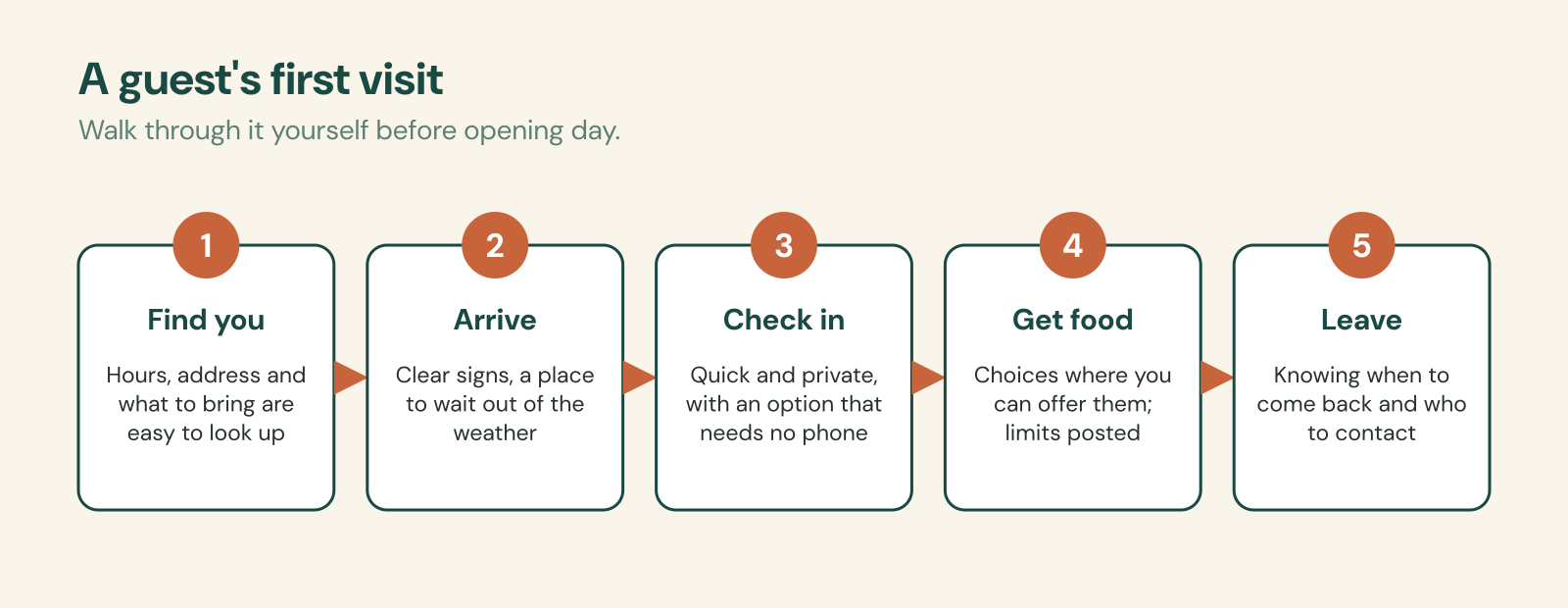
Make the first visit understandable
Publish your location, hours, what to expect, transit and parking details, whether appointments are needed, and any documentation requirements. Explain the process in plain language and in the languages your neighbors speak. Appendix B has a one-page guest information sheet.
Collect less information
Decide why each question is needed before asking it. Household size helps plan quantities; contact details support reminders; anything more sensitive needs a clear purpose and safeguards. Program-funded food may have mandatory registration rules, and it helps to tell guests which questions come from the program and which come from you. Appendix C has a short registration form to start from.
Keep check-in quick, and never require a smartphone
For pantries that track visits, a fast check-in shortens lines and spares guests from answering the same questions every time. Whatever method you use, keep a clear alternative for anyone who does not have a phone, prefers not to use one, or needs help. Avoid showing personal details on a screen other guests can see, and do not ask people to wear or display anything that marks them out in line.
Stock food people can use
Ask what guests cook and eat, then let that guide your needs list and purchasing. Think about households with no stove or refrigerator, people who cannot open a can without a can opener, small children, older adults, and common dietary needs such as low-sodium or diabetic-friendly options. Familiar staples for the cultures in your neighborhood matter more than variety for its own sake. A recipe card next to an unfamiliar item helps it go home instead of sitting on the shelf.
Offer choice wherever practical
Even a pre-packed model can let guests choose a protein, decline items, or request alternatives. Do not assume that every household has the same dietary needs or cooking equipment.
Set limits transparently
If visits or item quantities are limited, make the rules consistent, visible, and easy to understand. Create a clear process for exceptions and complaints.
Plan for access barriers
Consider limited mobility, hearing or vision differences, language, transportation, work schedules, and households without smartphones or email. Decide how a neighbor or family member can pick up for someone who cannot come in person. At controlled-access self-service sites, provide an alternative entry method and clear contact instructions if access fails.
Ask how it is going
Give guests an easy, anonymous way to tell you what is working: a comment box, a two-question card, or a short conversation on the way out. Ask whether the hours work, what food is useful, and what is missing. Then act on something you hear and tell people you did.
Discuss with your team
- Which rules are truly necessary?
- What would a first-time guest find confusing?
- What do we ask guests to do that a grocery store would never ask a customer to do?