
Chapter 6 · All chapters
- 1Decide what problem you are solving
- 2Choose a distribution model
- 3Set up the organization
- 4Plan the space and equipment
- 5Find reliable food sources
- 6Food safety and inventory
- 7Design the guest experience
- 8Recruit and manage volunteers
- 9Board governance and leadership
- 10Money, policies, and accountability
- 11Get the word out
- 12Run a distribution day
- 13Measure results and grow
- 14A 90-day launch plan
- AReady-to-adapt templates
Chapter 6 of 14
Food safety and inventory
A simple system is better than an elaborate one that no one follows.
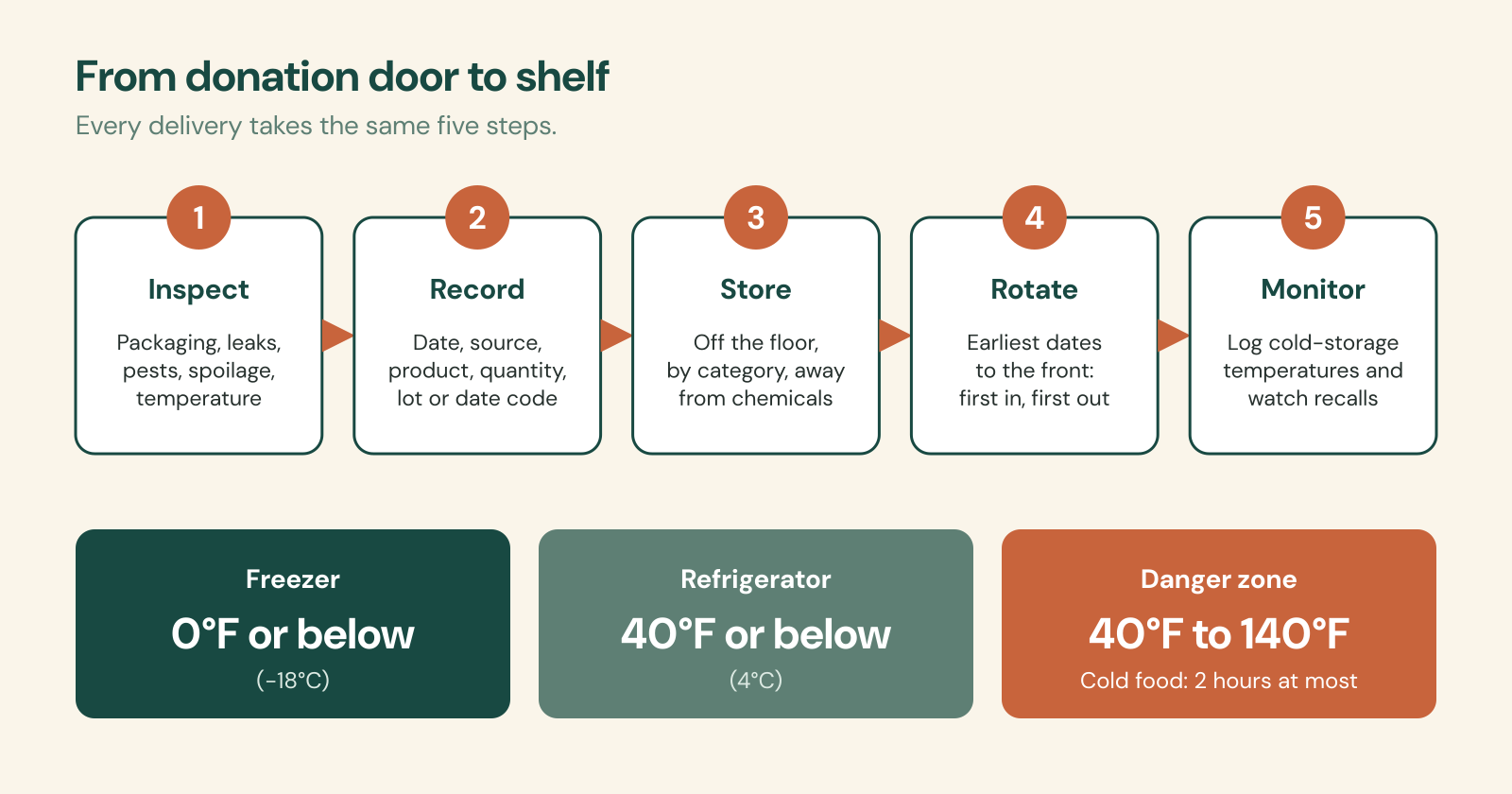
At receiving
Inspect packaging and look for leaks, pests, signs of spoilage, and temperature-sensitive products. Record the date, source, product, quantity, and any lot or date details you would need to respond to a recall. Reject food that cannot be safely assessed. Appendix D has a receiving log.
Separate and rotate
Keep food off the floor and away from chemicals. Organize by category, label shelves, and move the earliest dates to the front so they go out first.
Read date labels correctly
Date labels do not all mean the same thing. With the exception of infant formula, the dates printed on packaged food are generally the manufacturer's estimate of peak quality, not a safety cutoff. Many shelf-stable foods are safe well past a "best if used by" date, and throwing them out wastes food guests could use. Use credible guidance, such as your food bank's date chart or the USDA FoodKeeper tool, instead of a blanket expiration rule, and never distribute infant formula past its date.
Cold storage
If you accept refrigerated or frozen food, keep refrigerators at 40°F or below and freezers at 0°F. Put an appliance thermometer in every unit, log temperatures on a schedule, and decide in advance what happens when a reading is out of range. Refrigerated food that has been above 40°F for more than two hours should be discarded. Train volunteers on safe handling and follow your health authority's requirements. Appendix E has a temperature log.
Allergens and repackaging
Keep food in its original labeled packaging wherever you can, so guests can read ingredients and allergen statements for themselves. If you break down bulk products into smaller portions, check with your health department first. Repackaged food usually needs a label with the product name, ingredients, allergens, and date.
Post clear food-safety and storage signs
Place simple signs where decisions happen: receiving tables (what can and cannot be accepted), storage shelves (food categories, rotation, and separation from chemicals), handwashing areas, and refrigerators or freezers (temperature-check steps and who to contact if readings are out of range). Post cleaning instructions and a reminder to report damaged packaging, signs of pests, or suspected recalls. Use plain language, readable type, and translations or pictures where helpful. Signs reinforce training; they do not replace it.
Consider food-handler training
Consider having the pantry lead and regular volunteers complete a basic food-handler course, even if it is not legally required. Training reinforces safe temperatures, handwashing, preventing cross-contamination, allergen awareness, and when a sick volunteer should stay home. Check with your local health department about whether a food-handler card, certified food protection manager, or other approval is required for what you do. Rules may differ for distributing donated groceries, handling refrigerated foods, and preparing or serving meals.
Recalls and incidents
Assign one person to monitor recall notices and create a way to find, hold, and remove affected stock. Record any safety complaint and who was notified.
How much inventory tracking you need
A small pantry can begin with a receiving log and a weekly count. As activity grows, track categories, locations, quantities distributed, waste, and stockouts. Technology should reduce duplicate entry, not add it.
Self-service locations
Self-service shelves and cabinets need assigned inspection and refill schedules, weather and pest protection, and a way for people to report unsafe food. Community fridges require dependable temperature monitoring, cleaning, and a plan for outages. Record stock removed for safety reasons and follow local food-handling requirements.
Discuss with your team
- Who can decide to reject unsafe donations?
- What is our plan for a power outage?
- How would we find every can from a recalled lot?